Friday, 18 March 2016

Manchester United - another season in tatters


Louis van Gaal limps on. His limp United side limp out of another competition. His pathetic excuses never washed and still don't. His insipid football inspires only disgust. His tired philosophy sucks the joy out of the beautiful game.

Comparisons with his pitiful predecessor, David Moyes, are now wholly just, if not a little unfair on the Scot. Worse still, there are parallels with Moyes' darkest days at Manchester United appearing around every corner, haunting him like ghosts of failures past. 

Moyes, too, experienced a humiliation on the road in Europe, when his United side lost to Olympiakos. The trouble is, Moyes' team turned things around, something Van Gaal's sorry bunch have failed to do - unless you count their victory in the second leg against FC Midtjylland in their previous Europa League round, which no one serious about football could. 

No. Van Gaal's United, having lost 2-0 to Liverpool at Anfield after a performance so spineless, so bereft of spirit or fight, that Sir Matt Busby must have turned in his grave, and could only muster a few minutes of mildly meaningful football in the return leg at a packed but subdued, and ultimately bereft, Old Trafford.

Moyes, too, experienced the nightmare of defeat against United's most bitter rivals within the walls of the Theatre of Dreams - albeit Van Gaal's was over two legs. He, too, failed to grasp the magnitude of the loss, as Van Gaal did on Thursday night. He, too, failed to understand why United's fans continued to sing, despite the humiliation. 

Under Moyes, United fans sang 'Twenty Times' relentlessly for almost half an hour, drowning out Liverpool's travelling support who, deep down, must have marvelled at the outpouring of their enemy's emotion, though they would never admit it. Under Van Gaal, it was less heartfelt, less rousing, more defeated. 

The song was different on this night, the mood too. The United Calypso was sung with a sense of weary acceptance of the new world order. Still, the United fans that sung did so for their proud history, for Busby and his Babes, for past glories and future hopes, for the famous, fearless football of Ferguson, and as a means of lamenting what they see before them now - a club whose soul is being ripped out, whose identity is going up in smoke, whom no one fears any longer but who everyone mocks.

Van Gaal is by no means the only one to blame for United's shocking decline, but he is to blame for the deep sense of listlessness that has enveloped the club of late. Minds have been thoroughly numbed by the wretched football on show each and every week, to the point where fans, while deeply troubled by what they see, are at a loss as to what to do about it. They stopped looking forward to matches long ago, the sense of escapism football used to offer a thing of the past.

The contrast between the two managers on Thursday could not have been more stark. Louis van Gaal, pen and pad in hand, rooted to his seat, while Jurgen Klopp kicked every ball and lived every moment, a bundle of energy on the touchline. Such enthusiasm, however much of it is for show, must filter through a team and spur players on to give that little bit more. What on earth happened to the Van Gaal that once did Kung-fu kicks on the sideline and, as recently as the World Cup in Brazil, celebrated and gesticulated with gusto? 

Moyes faced Manchester City shortly after his home defeat to Liverpool, and lost. Van Gaal faces them on Sunday. United fans have no confidence whatsoever that their team will this time prevail, despite City suffering their own slump. Such is the mood around Old Trafford.

Fans will be around long after these current players are gone, and long after Van Gaal is a distant memory. It is they who keep the traditions of the club alive, despite the likes of Van Gaal betraying them with his bland brand of football.

United's lame duck of a manager should have been given his marching orders long ago. Alas, as with Moyes, Van Gaal has been left to limp on, leaving the club's season in tatters, and the fans in a state of despair once more.

Wednesday, 9 September 2015

Well done, Wayne


In case you missed it, which you didn't, but in case you did, Wayne Rooney became England's all-time leading goal-scorer on Tuesday night. 

As he thundered home his fiftieth goal for his country from the penalty spot, in front of a Wembley crowd who no doubt would have preferred to witness history being made with a fifty-yard screamer, we finally got to see how our nation would react to such a long-standing, long-inevitably-falling record finally being broken.

Rooney himself was clearly overwhelmed. Red of face and teary-eyed, he took in the rapturous appreciation of the crowd, presumably suppressing the urge to bow to all four corners of the stadium and request a microphone be thrown from the bench so that he could make a speech - that came later, with Football Association TV, in quite the televisual coup, securing exclusive behind-the-scenes access to the England changing-room, where Rooney received a hero's welcome from his teammates.

Meanwhile, the weird and wonderful world of social media was erupting. The football community, from Gary Lineker to David Beckham, Alan Shearer to Michael Owen offered their heartfelt congratulations, with many ordinary fans following suit. Yet there was another section of society, a dark, ungrateful underbelly, who poured scorn on Rooney's achievement. They were quick to point out his relatively abysmal performances at World Cup finals, choosing to omit unnecessary information such as the fact he's had to be wheeled off the plane on a stretcher just to take part in those tournaments; they belittled his accomplishment by suggesting that his goal tally had been massaged by friendlies, apparently not noticing that the man he has replaced at the top of the goal-scoring charts scored far more friendly goals than him.
Still, though these people's unpalatable views were largely drowned out, they do perhaps represent a more widely held opinion - he's no Sir Bobby Charlton.

If only someone else had broken Charlton's record before him, Rooney's achievement may not have been received with so much resentment in so many quarters. Had Lineker, Shearer or Owen reached fifty first, perhaps we would more readily congratulate Rooney. As it is, he has knocked a true legend, not to mention a true gent, off his perch. And this makes many of us angry. Charlton represents our glorious past, Rooney our bloated, mollycoddled present. 

Poor Wayne. It's not his fault he was born in the eighties, rather than the thirties. But he was, and times have changed. Where Sir Bobby would ride to Old Trafford on the bus with the fans on a match day, his freshly-dubbined boots around his shoulders, a flat cap on his head, a pipe between his teeth and a loaf of Hovis under his arm, Wazza turns up in an expensive car with blacked-out windows and a personalised number-plate; where Sir Bobby's unruly, faintly ridiculous combover is endearing, Wayne's own fight for more fruitful follicles is a source of mockery and derision; while Rooney holidays in Las Vegas, Charlton probably shivered behind a windbreaker in Skegness; and where Charlton would celebrate a goal with an understated hop and a skip, Rooney tear-arses to the nearest camera and tells millions of people to "Fuck off." 

Think about it, though. If Rooney were to get on a bus today, he'd be at best mobbed, at worst outright assaulted. Had the answer to a better head of hair been available to the young Sir Bobby, do you think he would have struggled on with just a comb and a pot of Brylcreem? Probably not. And, had Charlton become a multi-millionaire as a teenager, his face plastered over billboards and on the backs of newspapers around the world, labelled England's saviour from sixteen, his every move and misdeed revealed and dissected by the press, flocks of paparazzi not allowing him and his family a moment's privacy, who knows whether it would have led to the occasional angry outburst, the pressure and weight of it all spilling out in rare moments of spontaneous, un-media-trained frustration.

Rooney may not be the loveable hero we all think we deserve, he may be the footballing embodiment of middle-age spread, huffing and puffing his way to a place in the history books, a pale imitation of his younger self, and he may not be Sir Bobby Charlton, but he has achieved something remarkable in an era with its own challenges, a time so far removed from that of Charlton's that it is barely worth attempting to work out which of the two men is better than the other.

Why not just put envy and nostalgia to one side for a moment, for this moment, and simply say "Well done, Wayne."


Friday, 3 April 2015

An Evening with Greg Dyke


Picture the scene: Greg Dyke is throwing a dinner-party for a few of his pals. They're onto the dessert and el vino has flowed. Naturally, Dyke being the main man at the FA, the conversation turns to the desperate state of English football. There is a good deal of wailing and even some gnashing of teeth as the group bemoan nearly fifty years of hurt. 

Out comes a delicious looking cheeseboard, its pungent aromas filling the room. A Brie de Meaux oozes and creeps, encroaching on the other cheeses like a bully. With watering mouths, the lads tuck in with good cheer, gobbling up the Gorgonzola and massacring the Manchego like men possessed. All that's left by the time they sit back in their chairs and loosen their belts is a forlorn-looking Cheddar that never stood a chance amidst such exotic company.

Dyke surveys this scene of devastation as he pours himself another glass of vintage port, the cheddar stirring something unexpected in his soul. Then, suddenly, 'Eureka!' He taps a stray spoon on his glass and springs to his feet like a man in the full flush of youth, which possibly has something to do with the port.

"By Jove," he cries, "I think I've got it!"

His guests are intrigued, if a little taken aback, by this sudden outburst. They puff on their cigars and await an explanation, which they feel sure will be good.

Dyke allows a pregnant pause for dramatic effect before excitedly exclaiming "Bloody foreigners, coming over, destroying English football!"

The dinner-guests, while somewhat confused, nod sagely. They respect Dyke and feel sure he's onto something, though what exactly he's onto remains far from clear. Unfortunately for them, their host fails to elaborate further and rushes out of the room. For the remainder of the evening, he can be found pacing the hallway, his glass of port in one hand and a dictaphone in the other. By the time the guests leave, he has hatched a cunning plan.

That plan was aired publicly this week. In case you missed it, it's similar to every other plan those at the FA have ever come up with. Essentially, blame the barren wasteland that is the English national team on foreigners. Not only that, but make it more difficult for the blighters to continue sabotaging our national sport by insisting that clubs must have more home-grown players on their books and making it trickier than ever to acquire a work-permit. He stopped short of demanding citizen-tests and ale-supping competitions for any foreigner who wants to play over here but that's probably next.

The problem with all this is that some of us quite like the foreign players we've seen infiltrating our game over the last couple of decades. Indeed, some of us believe that things have improved as a result. Okay, for every Eric Cantona you'll get an Eric Djemba Djemba but, still, Eric Cantona was pretty great and, what's more, he inspired and improved one of the finest crop of English players ever to emerge from the same club. The likes of David Beckham, Paul Scholes and Gary Neville all tell of Cantona's remarkable influence on them.

Quite why Dyke believes that forcing clubs to increase their quota of home-grown players will magically improve the England team is something of a mystery. Perhaps, again, it was the port making him all misty-eyed but, the fact is, England were hardly world-beaters prior to the foreign invasion. It could even be argued that the national side has, on the whole, improved since then - still rubbish but just that bit less rubbish. 

When you consider some of the players who have worn the three lions in recent times, they aren't all that bad. Beckham, Scholes and Neville were some of the best of their generation. Then there's the likes of Steven Gerrard, Alan Shearer, Michael Owen, Wayne Rooney and Rio Ferdinand, to name just a few who have somehow managed to rise above the rabble of imports and forge decent careers for themselves. 

Come to think of it, England probably should have done better in major tournaments than they have. But then, major tournaments are notoriously difficult to win. Bad management, bad decision-making by players on the day and bad luck all combine to thwart football teams, as well as simply losing to a slightly better side. 

Dyke's simplistic notion that foreigners are stunting the growth of potential England stars is predictable and deeply uninspiring. Great players inspire youngsters, wherever they hail from. Great players also improve slightly less-great players. Instead of increasing home-grown quotas, perhaps the FA should concentrate on improving facilities and coaching for kids, and pressing governments to stop ripping up playing-fields left, right and centre. You know, things that might actually bear some fruit in the long-run?

The cream will, more often than not, rise to the top. If an English player is good enough, he will be picked for his club. If he's not, that club should be free to find someone better, foreign or otherwise. Just like if you fancy something more adventurous on your cheeseboard than cheddar, you are free to go wild in the Waitrose cheese-aisle.

Fortunately, Dyke needs the Premier League to ratify his hair-brained scheme. I know what I'd say if I were them: "Go home, man. You're drunk."


Tuesday, 12 August 2014

The Black Dog


So, another famous person has died in tragic circumstances. This time, it's Robin Williams.


Like so many news stories, these days, I found out about Williams' death on Twitter. It's odd, but there's something about that medium that makes bad news even more bleak than it already is. Perhaps it's the unavoidable pithiness of it. After all, it's difficult to fit a lot of detail into one hundred and forty characters. Or perhaps it's because you're happily reading tweet after tweet about football's latest transfer sagas or hilarious gifs only to be knocked for six by the unexpected and shocking.


Back in the days before social media, we had familiar news-readers to soften the blow. We could tell when the information they were about to impart was going to be particularly harrowing by the sincerity and sadness of their facial expressions. They delivered such stories gently, sharing our grief, understanding our pain, their measured, sensitive words akin to a stroke of our hair or a heartfelt cuddle.


Not so with Twitter. There it is, sandwiched between a picture of a cat and a handbag that bears a striking similarity to Phil Jones' gurning face. There's no warning, no change in font to give you time to prepare yourself for what's to come. It's just there. In black and white. Stark and remorseless.


The news that Robin Williams had died, at the age of just sixty-three, sent a chill through my heart. It is always a shock when someone famous, who has been famous throughout your lifetime, dies. What was the far bigger shock, though, was the revelation that the Hollywood star had taken his own life due to a long battle with depression. I hadn't even been aware that he was depressed.


The reaction to this kind of news is all too predictable. How can a man with so much to live for, so much to be happy about, take his own life? How can he be depressed with all that fame and fortune? How can he choose to leave behind all the people that love him? How can he be so selfish?


Yet it is fair to assume that Robin Williams, just like all the millions of other people who take their own lives every year, far from seeing his own suicide as selfish, probably felt he was doing the world, including those that loved him most, a favour. 


Such is the mind-crippling power of this terrible affliction. It seeps into every sinew of your being, warping your thought-processes to such a degree that you become incapable of believing that anyone could possibly love you or that anyone would miss you if you were gone. Indeed, you feel that you have become such a burden on the rest of the world, particularly your loved ones, that your own death can seem like the only possible escape from the darkness that has surrounded you.


Winston Churchill, another sufferer of depression, referred to it as his 'Black Dog,' a description that resonates with many. The image of a black dog, stalking the sufferer from the shadows, is a powerful one. It is always there, even during periods of relative happiness, forever threatening to overpower you once again.


Depression does not care about people's background, nor their bank-balance. It can strike anybody at any time, often for no apparent reason, and is surrounded by so much stigma and misunderstanding that the victim often suffers in wretched silence. Then, when the courage to confide in someone you trust is finally plucked up, their reaction, born out of fear and misunderstanding, more often than malice or malevolence, can be overwhelmingly disheartening. They fidget uncomfortably in their seat, unsure of where to look or what to say. It's not their fault, of course. They cannot be expected to understand or comprehend the black hole of despondency that has consumed you.


Robin Williams' suicide is a grim reminder that depression can sink its claws into anyone, regardless of the life they lead or the life we who look in from the outside believe they should lead. Happiness can be sucked from any soul and trampled under the unforgiving feet of their own Black Dog. There will be little for those who loved Williams, be they those closest to him or the many millions who loved him from afar for the joy he brought to their lives over so many years, to take comfort in in light of such sad news.


It is to be hoped, however, as it is when any high-profile figure is revealed to be living anything but the fairytale we often assume they should be, that his death will not be in vain; that the mere fact we are all talking about it, whether from a position of ignorance or understanding, will be another step towards an acceptance that depression is a deeply debilitating illness, as well as being a remorseless and cold-blooded killer that will prey on anyone.


Thursday, 5 December 2013

Home Truths


Being a Manchester United fan has been relentlessly strange so far this season. It's fair to say it's been 'up and down.' Okay, mostly down, with one or two fleeting ups, notably at home to Arsenal and away to Leverkusen.

You see, we're not used to this. Not the sense that we might not be the best team, or have the best squad, in the country, as that has quite often been the case in recent years, but that, in spite of our obvious deficiencies, we might not win the league anyway. 

To outsiders, this attitude has reeked of arrogance and entitlement. As well it might, given that our attitude has indeed been one of arrogance and entitlement. Still, what do you expect, given the unprecedented success our club has enjoyed over the last two decades?

Such unswerving confidence isn't instilled through relegation scraps or occasional promising League Cup runs. It stems from the relentless pursuit and regular attainment of silverware, with which we United supporters have been spoiled rotten over recent years.

It comes, too, from knocking your greatest rivals 'off their fucking perch,' as promised by your manager when such a feat had seemed an impossible dream. 

Hence, after years of sneering smugly from the Premier League's summit at all of those below us, it is, inevitably, taking some time for us to get used to the unfamiliar sensations in our necks, from craning to gaze enviously at those that sit above us.

Thus far, the majority of us have consoled ourselves with gallows humour, finding some small degree of comfort in the novelty of self-deprecation. Yet, all the while, we have clung to the belief that things will surely come good; that the early stages of this season, without Sir Alex pulling the strings, were always bound to be difficult, but were certain to settle down.

Here we are, however, with Christmas looming large on the horizon, languishing in mid-table-anonymity, not so much hanging onto the coat-tails of our rivals as lying, drunk, face down in their muddy footprints, the feel of their coat-tails but a memory on our fingertips.
 
Just when we think we've turned a corner, be it with a last gasp victory at Sunderland, a hard fought win at home to Arsenal, or a slick, ruthless demolition of one of Germany's elite in their own back yard, we are subjected to abject displays in the following fixtures.

Nevertheless, with Sir Alex's parting words, urging us to show patience with his chosen successor, still ringing in our ears, the majority of us have resisted the urge to take up arms and join the 'Moyes out' brigade, laughing off such knee-jerkery with a withering wave of our hands.

Yet it would be lunacy on our part to blindly believe in the new man and refuse to ask uncomfortable and disquieting questions of his embryonic reign, simply because his predecessor told us to, given that, after fourteen Premier League games, we are slumped, like a weary boxer after a bruising fight, in the ignominious position of twelfth in the table.

Who among us, for example, didn't feel a pang of deep concern when Moyes instigated the wholesale clear-out of Sir Alex's back-room staff, with all their many years of combined, serial winning experience, over the summer? Yes, we could understand his desire to 'stamp his mark' on the club and bring some of his closest allies to stand shoulder to shoulder with him as he embarked on this new, daunting chapter of his career but, given that the club (not to mention the players) was already reeling from the upheaval of losing the formidable partnership of Ferguson and Gill, it seemed, even at the time, a frighteningly risky way to exert his authority.

Then there was the tragi-comic transfer window, during which Moyes and his sidekick, Penfold... sorry , Ed Woodward, made spectacles of themselves with promises emptier than Greece's coffers, embarrassing statements of shameless self-aggrandisement and attempt after failed attempt to lure some of Europe's finest players to the club. 


Ultimately, of course, and with an air of depressing predictability, the world watched on as United did the equivalent of a last minute, panic-stricken, Christmas Eve dash to a petrol station, with Marouane Fellaini the party-sized box of Celebrations, a forlorn, hastily tied piece of ribbon wrapped around it, all that they returned with.

(Still, I suppose we should be thankful they convinced/forced Wayne Rooney to stay. Like a new signing, that).

Then there are Moyes' training methods, rumoured to be rather brutal. Now, the aforementioned Rooney appears to be thriving on them, having shed the excess pounds that so infuriated Fergie, enabling him to run around inconsequentially until his heart's content. Other players, however, seem less enamoured, chief among them Robin Van Persie. Fresh off the back of the two best, injury-free seasons of his career, the Dutchman has been sidelined with worrying regularity this term, forced onto the treatment table by mysteriously vague knocks and niggles. 

Moyes' Everton were notoriously slow starters, often relying on a post- Christmas surge to rescue respectability from forgettable starts to their season. Are the travails of his new charges mere coincidence, or is it his training regime that's to blame?

Personally, I'm all for giving David Moyes time. He seems a nice chap, did a damned fine job with Everton, and was always bound to experience teething problems in his new post. 

Still, legitimate questions need to be asked, without being immediately shot down with childish, finger-pointing accusations of disloyalty to Ferguson who, after all, cannot remain blameless for the club's current plight, given that the holes in United's midfield, having been plugged with players like Anderson and Tom Cleverley, the equivalent of rolled up toilet paper, for many years, are finally being brutally exposed.

Yes, it has been a strange season for we United fans so far. Perhaps the strangest thing of all is the new sense of fear that is gradually, like a creeping fog, enveloping us, and that was laid bare by another home defeat last night; not only must we accept that we almost certainly won't win the title this season, we may even struggle to make the top four.


Saturday, 30 November 2013

We'll Be His Wingman Any Time


Opinions, eh?! *applies comedy slap to thigh* They're everywhere. Everyone's got them. In fact, you can barely move round here for opinions these days. Just when you think you've got away from the buggers, another one pops up and stuffs itself down your throat.

Take Ryan Giggs, for example. Last Thursday started out as a simple, heartfelt tribute to a man who has contributed more than most to the two and a bit decades since the birth of Premier League football, on his 40th birthday. 

There were photos, YouTube compilations, quotes, tributes, reminiscences, and lots and lots...and lots and lots...and lots and lots...and lots (ad Infinitum) of statistics, all lovingly produced by those that wished to show their appreciation for Ryan Giggs.

Now, for Manchester United supporters, this was fine. We could, and do, enjoy revelling in hour upon hour of a particular individual's finest and most memorable moments, happily re-living their careers in a cocoon of nostalgia, blissfully unaware of the outside world.

Yet, these days, it is dangerous to forget about the outside world, for not a moment goes by that they're not watching, like hungry tigers, poised to pounce upon their prey and poop the party in midflow.

And so it was on Thursday, as all the millions of non-United fans grew tired of our eulogising and embarked on a cruel and savage hate campaign whose sole purpose was to besmirch the reputation of one of our greatest players.

The brutes took to their task with great relish, digging up long-forgotten dirt from the birthday boy's distant past and slinging it into our aghast faces. 

Fortunately, we northerners are made of damned stern stuff. We're used to biting winds and unforgiving frosts. Our days begin with bare-footed trudges to our places of work, over perilous precipices and through rocky ravines. We can skin a rabbit with our feet, blindfolded, from the moment we exit our mother's womb. So a few nasty words, however spitefully slung, fall woefully short of disturbing our equilibrium.

Nevertheless, 'Lay off Giggsy!' we beseeched. 'What's he ever done to you?' we cried, the scalding lava of indignation coursing through our veins.

For, whatever Ryan Giggs' off-field misdemeanours, he is, to many of us, a hero.

He is not, never has been, and never will be, a role model, however vehemently some would argue otherwise. He's just a man. A human being. Like all the rest of us. Only he has been blessed with a gift galaxies beyond the reach of we that have watched in wonder since his emergence, over two decades ago, when he burst onto the scene and made Lee Sharpe, who had seemed a revelation up to that point, look like a club-footed buffoon that wouldn't know a football if it slept with his brother's wife.

It's not that we don't understand people's objections to our putting Giggs on a pedestal. After all, we too are human; we too recoiled upon reading about the wandering mojo of the modern age's greatest yogi. It's just that Ryan Giggs has been a such a big part of our lives for such a long time, bestowed so many memorable moments on us, and then shared in so much of our profound joy, that we are prepared to defend him to the bitter end and overlook his indiscretions, as we would a best friend, brother or son.

Many outsiders no doubt accuse us of burying our heads in the sand, of a shameless propensity to engage in wanton self-denial. Well, so what? Who can blame us for wishing to remember Giggs solely as the magnificent footballer he has been, rather than the...I forget what dastardly deeds he's accused of.

For many United fans, there have been few more exhilarating sights than Ryan Giggs in full flow. Our eyes still glaze over when we think of him in his pomp, gliding over the turf with the speed and grace of a champion ice skater, fleet of foot and floppy of hair, the ball an extension of himself, leaving opposition players spinning in dazzled confusion in his wake. 

It's not that we excuse Ryan Giggs for his mistakes. It's simply that, for us, the good that he has done outweighs any bad so heavily, as to make it barely a footnote on his glittering Wikipedia page.


Wednesday, 27 November 2013

Wayne, Wayne, Go Away


He's one of the greatest players ever to have graced the hallowed Old Trafford turf. A true Manchester United legend, his name, famous throughout the world, is synonymous with the club's illustrious history and proud traditions, whose loyalty to the United cause, not to mention his incredible achievements on the pitch, serves as an inspiration to players and fans alike.

But enough about Sir Bobby Charlton. It's the man who looks increasingly likely to usurp him as Manchester United's all-time leading goal-scorer, Wayne Rooney, that has been occupying my thoughts.

Having woken, on the Monday morning after the Arsenal match, with that warm glow that comes only from beating one of your rivals over the weekend, in a potentially season-defining match, it didn't take long for the seed of dissatisfaction, sown as I sat in the stands of Old Trafford, to germinate into something altogether more sinister.

I racked my brains and searched my soul. All the doubts and fears of a first season spent without the familiar presence of Sir Alex Ferguson at the helm bubbled to the surface. Yet, it wasn't that. We'd won. We'd beaten Arsenal; the league leaders; the pace setters. Okay, we didn't do it in style, but we still beat them.

So why did I still feel so hollow?

Then it struck me, as I read match report after match report and the name, Wayne Rooney, leapt from the page, again and again, and was thrust down my throat.

I was there. So I can understand why his performance was praised so highly. He was, after all, one of our star performers on the day, having put in a quintessentially Rooney-esque shift, more working class than world class; tracking back with admirable tenacity; running himself into the ground, without ever setting the world alight with a moment of brilliance like, say, a Ronaldo or a Messi would do. Still, I even found myself chanting his name at one point, caught up in the moment, transported, momentarily, to a different time, long ago, when he had seemed another potential hero to me. 

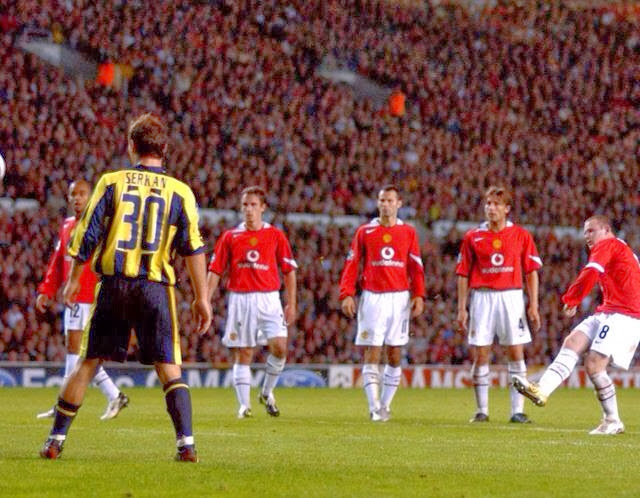
I was there on his debut, you see, when he tore apart the first European opposition he'd come across in his career with the nonchalant brutality and fearless arrogance of a Killer Whale toying with a helpless seal. I was one of the thousands that watched from the stands as the Old Trafford floodlights became his personal spotlight for the night, this footballer-that-looked-more-like-a-boxer from Croxteth, who had crossed the divide from Merseyside to Manchester, his eyes glinting with the cockiness of youth, the flag of his steam-rolling England performances during Euro 2004 waving proudly in his wake.

We all chanted his name that night. We took him to our hearts. Even the doubters, myself amongst them, who had thought him little other than a jumped-up scally, quickly realised that we were witnessing the dawn of something potentially very special; something raw, dangerous and exhilarating. There was a fire and a fury about the young Wayne Rooney that spoke to our collective soul. Here was someone, like Cantona and Keane before him, who could grip a game by the scruff of its neck and change its outcome through the sheer swashbuckling force of his will.


Yes, we chanted his name, even labelling him the 'White PelĂ©,' a comparison to one of football's true icons that seems a little silly all these years later. 

We forgave him his occasional bouts of bull-like, mindless aggression, putting them down to youthful exuberance and reminding ourselves of all the other United greats that had been prone to such moments of insanity over the years, excusing his every petulant kick and scything challenge, and closing ranks whenever such actions left him otherwise isolated on the national stage.

Then he betrayed us. 

Now, I'm a fully grown, thirty two year old man. I'm not labouring under the illusion that anyone who pulls on the sacrosanct red jersey of Manchester United should be willing, nay happy, to give their life, unquestioningly, to the cause, not just content, but privileged, to devote every moment of their career to this great club. 

Still, flirting with City is unforgivable. 

Nevertheless, while perhaps not forgiving Rooney, the majority of us, over time, opted to give him another chance, convincing ourselves he'd been badly advised by the posse of parasites that have attached themselves to him over the years, with Paul Stretford chief-leech among them.

Inevitably though, it has never been the same. The days of our revelling in his glory are gone. We have been putting up with him ever since Sir Alex's famous press conference, when he came as close as ever he would to lowering himself onto bended knee and tearfully begging a player to stay.


We remember that day, we fans, when we watched, mortified, as our leader whored himself and our football club out for the sake of one individual, who was holding us to ransom in order to improve his own personal circumstances, recoiling at the realisation that we needed him more than he needed us.

Still, as I said, we moved on. We got over it and, after a time, we began to believe that, with Sir Bobby's goal tally in his sights and the acquisition of a truly world class, ready made goal machine in Robin Van Persie for him to play alongside, Wayne would surely see that staying at United was the best thing he could have done.

Only, he didn't. Instead, he seemed to take the purchase of RVP as a personal attack on him which, in part at least, it probably was. After all, for years, Rooney had been United's go-to man for the big games, often carrying those around him. Now, he was being dropped or substituted on a regular basis, and had to suffer the indignity of Sir Alex publicly poking fun at his weight, seemingly revelling in his role being reversed from bullied to bully, and making it abundantly clear that he felt Wayne Rooney had now become eminently dispensable. 

Yet the new regime, with David Moyes at the helm, made keeping Rooney, this repeatedly disloyal, selfish, arrogant, self-serving, sulking, out of shape, self-styled-megastar, at the club their overriding priority over the summer, and they celebrated the achievement of it like they would the purchase of a new star signing, conveniently brushing over the fact that he was yet to actually sign a new contract and refusing to celebrate goals with his teammates, indicating that he was merely being held hostage.

I don't hate Wayne Rooney. He has given us some wonderful memories over the years. Likewise, I'm not so bitter that I can't appreciate when he puts in a genuinely world class performance, as he did last night, providing four assists in United's 5-0 demolition of Bayer Leverkusen. I just prefer it when someone else, like Shinji Kagawa, for example, takes the accolades, because then my joy isn't tainted by treachery.

I'm sick and tired of Wayne Rooney. I'm tired of his name. I'm tired of his face. I'm tired of his attitude. I'm just tired of him. 

As for Sir Bobby's record, the thought that we may see Wayne Rooney's name at the top of that list in the future would prove beyond doubt that there really isn't any justice in the world. I can only pray that David Moyes plans to offload the pretender to Sir Bobby's throne as soon as his 248th United goal hits the back of the net.